
Bishop Hovakim Manukyan Leads Good Friday Burial Service in Manchester
“Christ is laid in the tomb, yet this tomb blossoms with life.”
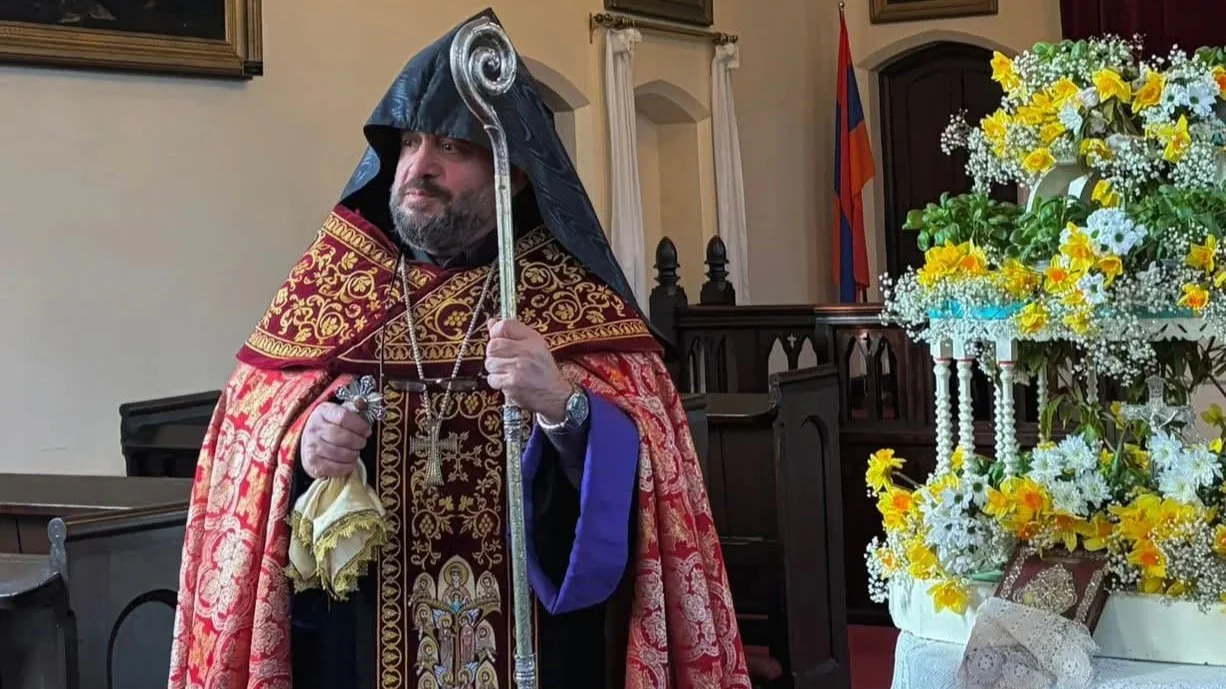
Bishop Hovakim Manukyan leads Good Friday Burial Service in Manchester, highlighting the life-giving mystery of Christ’s Tomb.
On the evening of Good Friday, Bishop Hovakim Manukyan presided over the Burial Service of our Lord Jesus Christ at the Holy Trinity Armenian Church in Manchester, gathering clergy and faithful in deep prayer and contemplation at the heart of Holy Week.
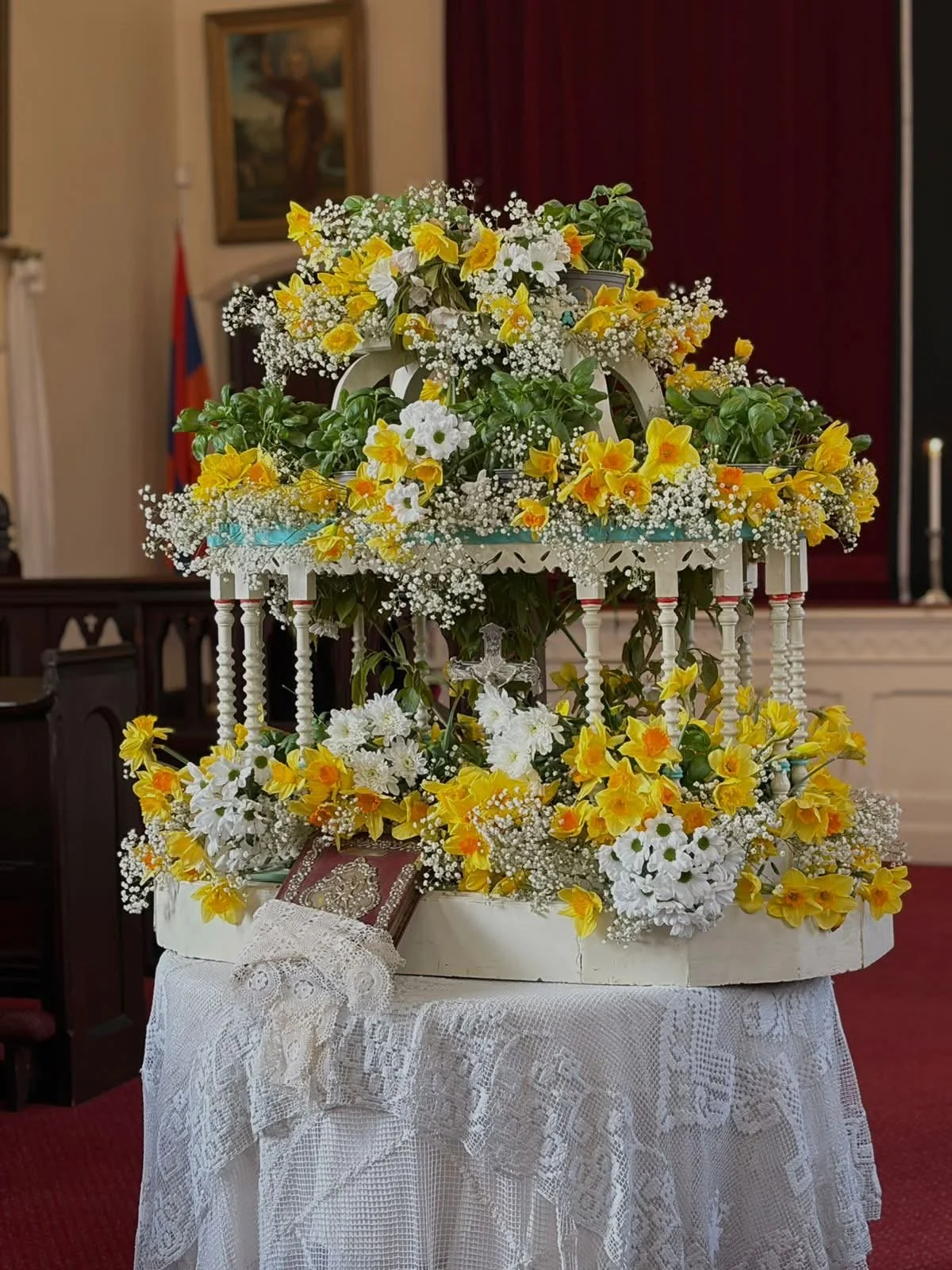
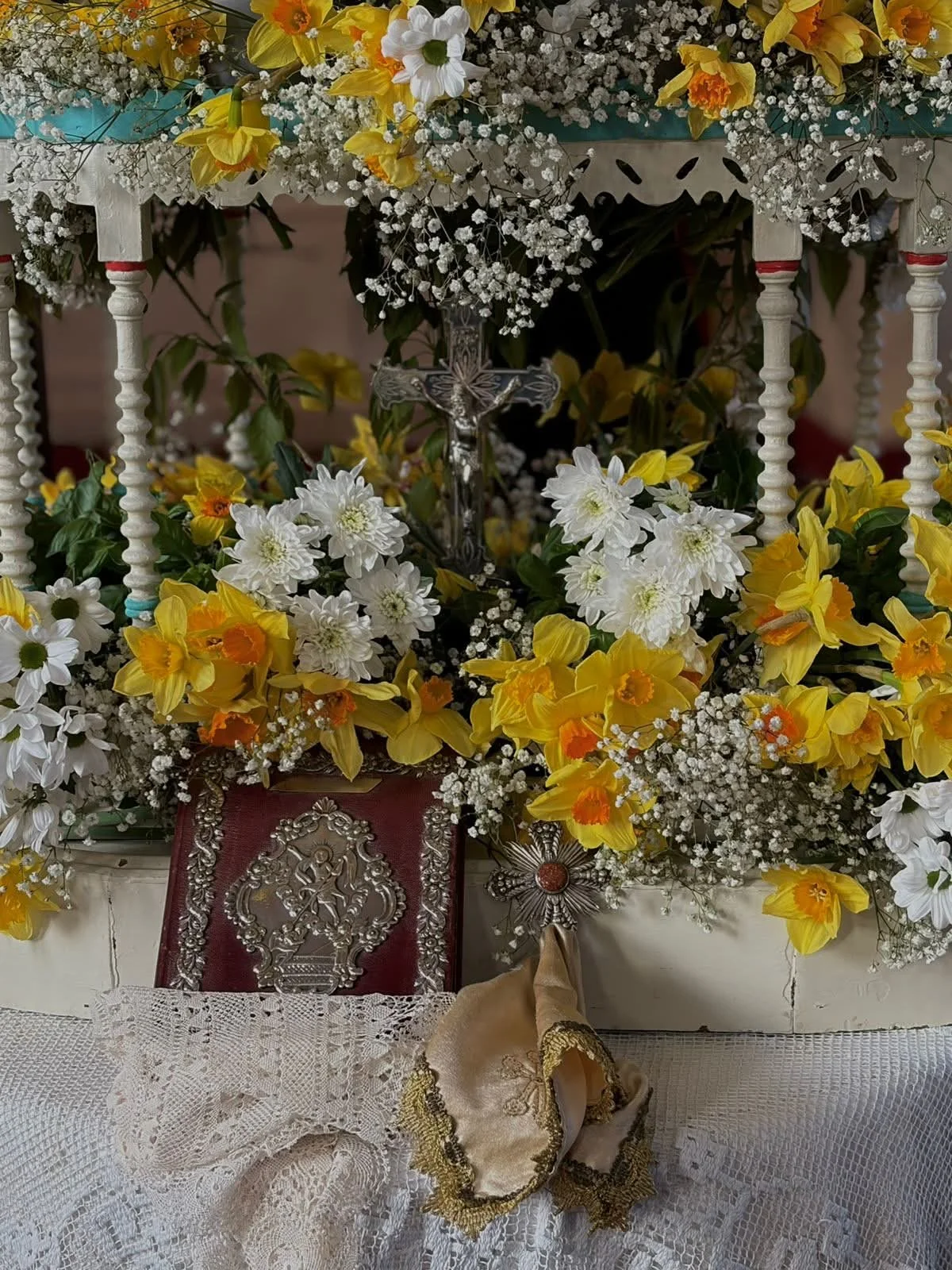
In the rich liturgical tradition of the Armenian Apostolic Church, the Burial Service is among the most moving expressions of faith, commemorating the placing of Christ into the tomb. At the centre of the church stood the beautifully adorned “flowered tomb” (Ծաղկեալ Գերեզման), covered in blossoms—an image both of mourning and of hope. Throughout the service, the faithful approached with reverence, passing beneath the tomb during the procession, a gesture symbolising participation in Christ’s burial and the promise of new life.
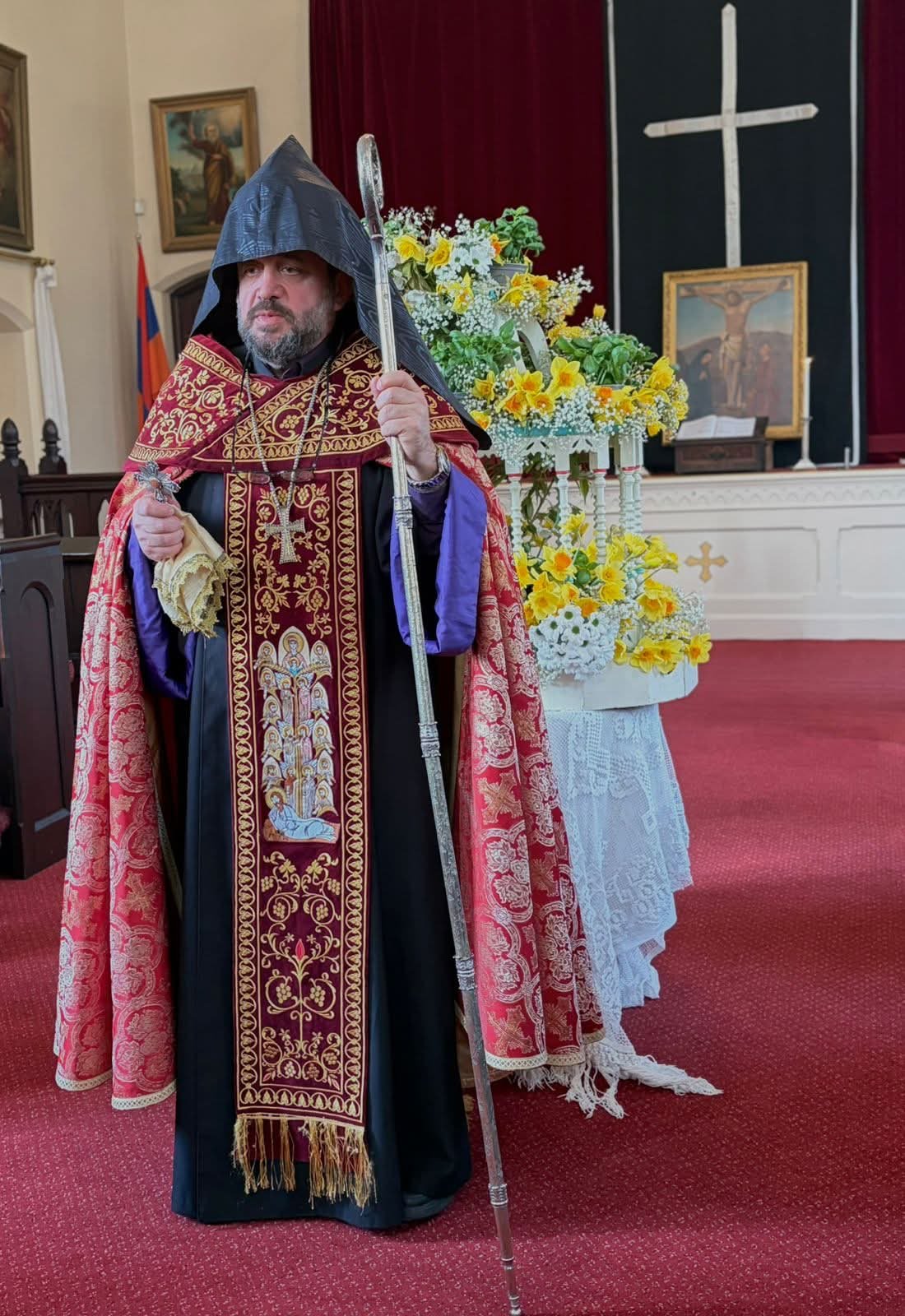
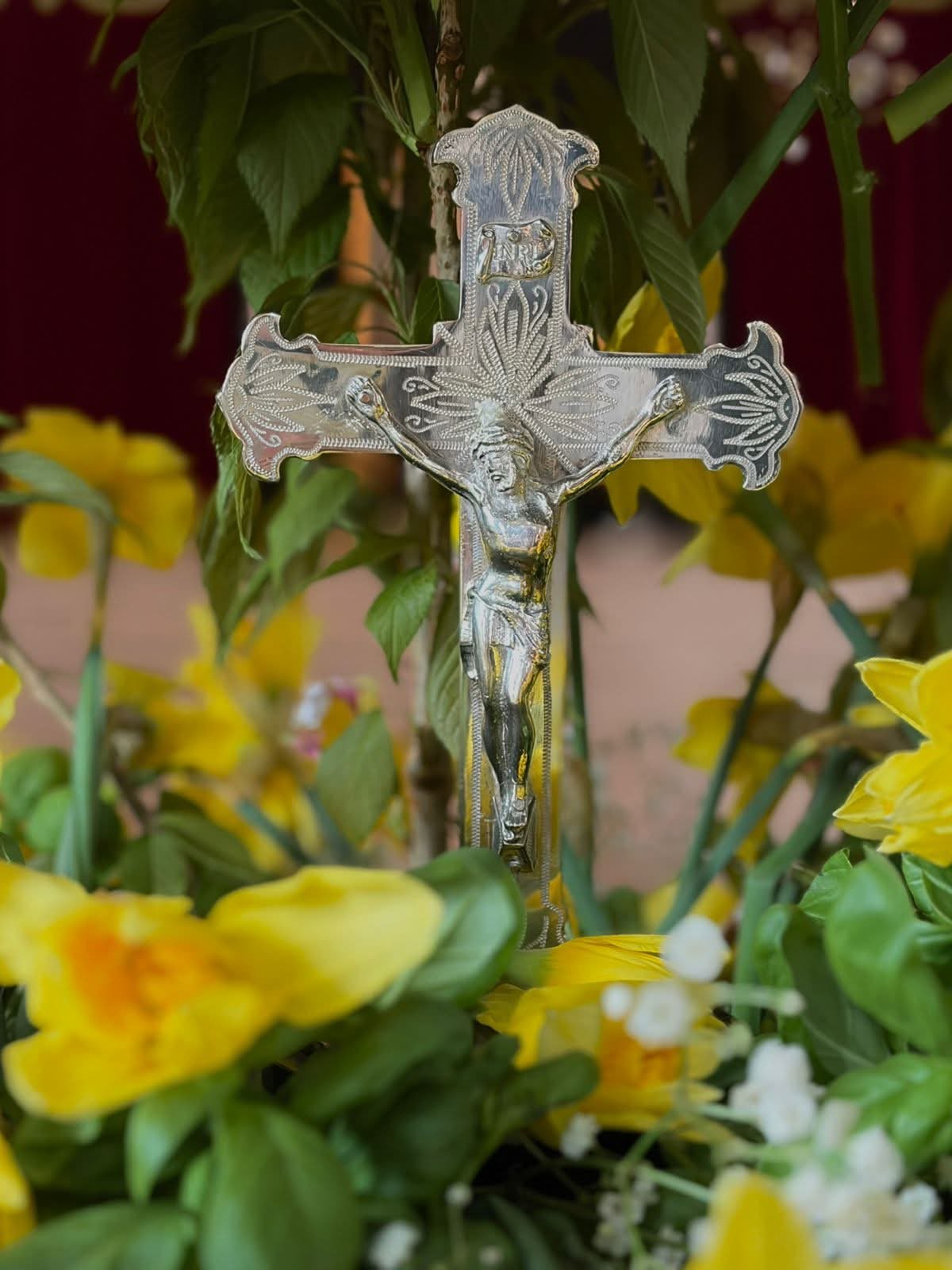
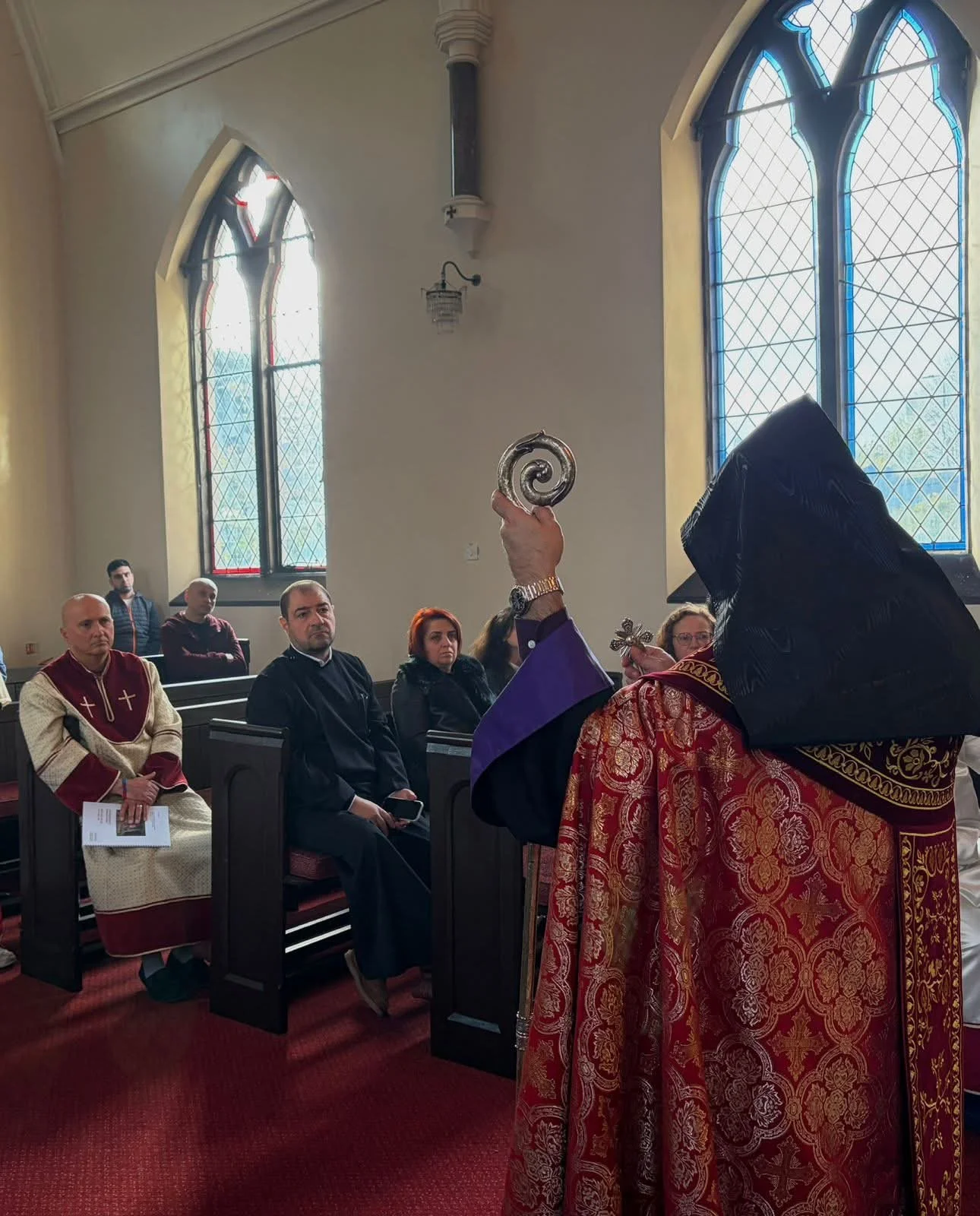
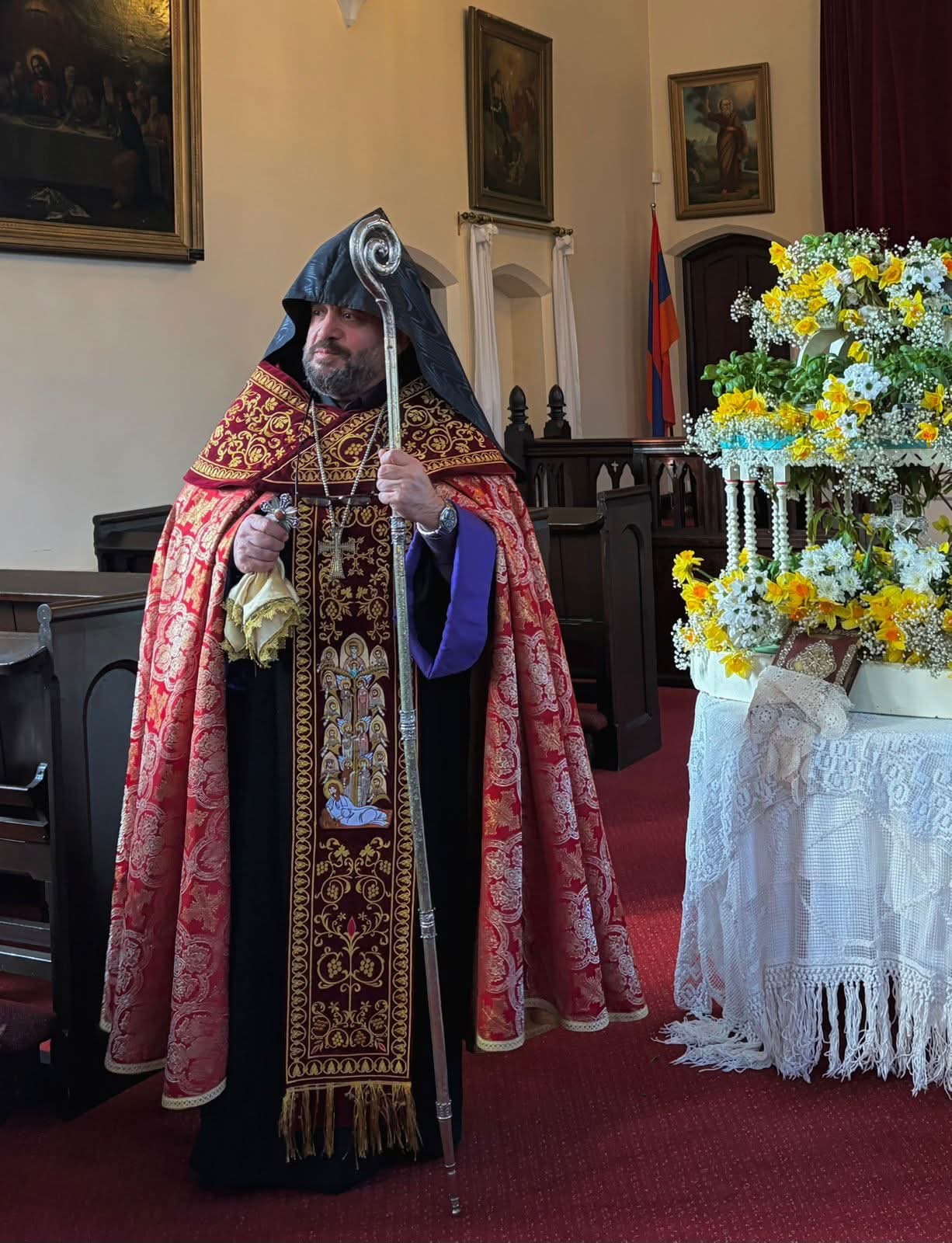
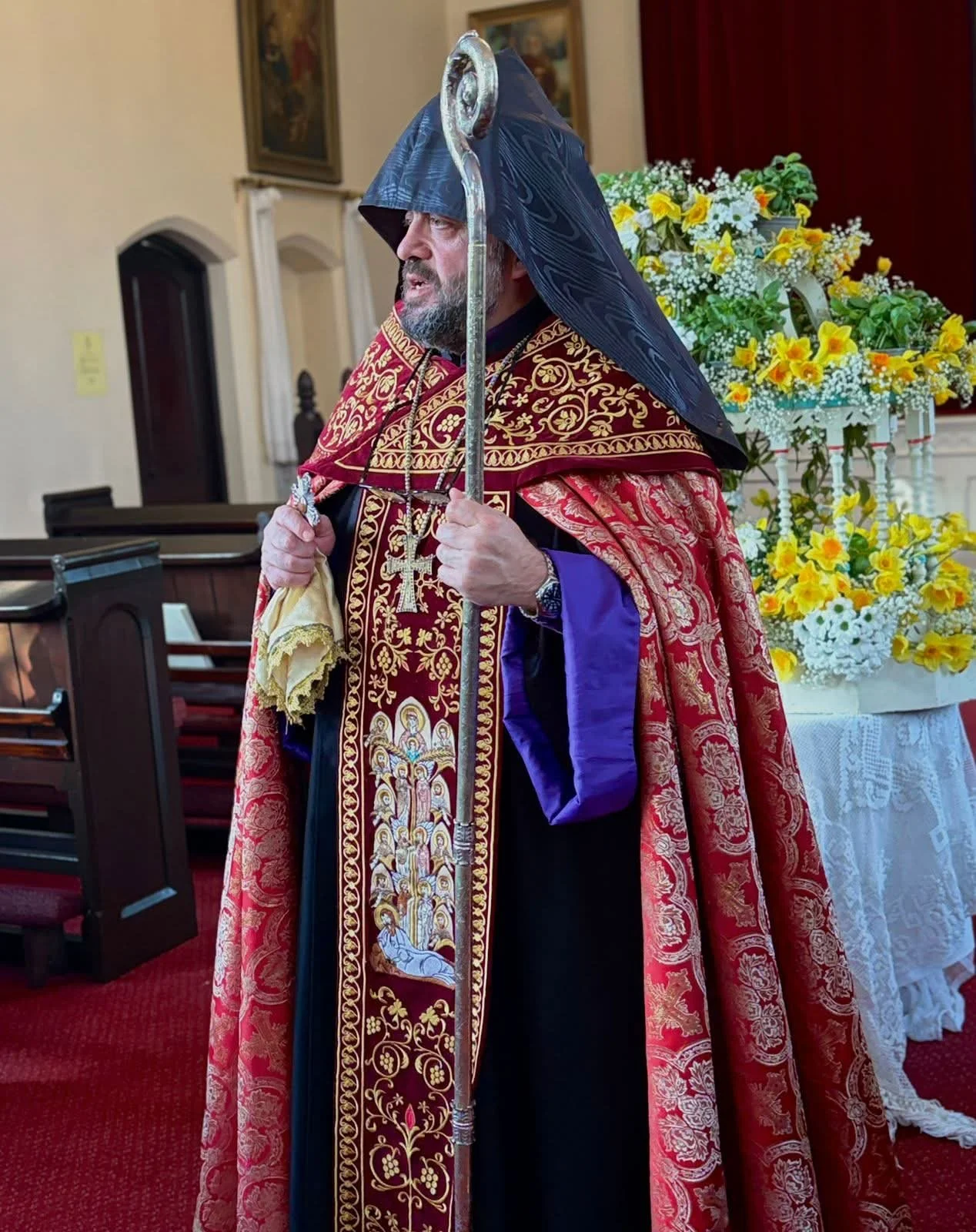
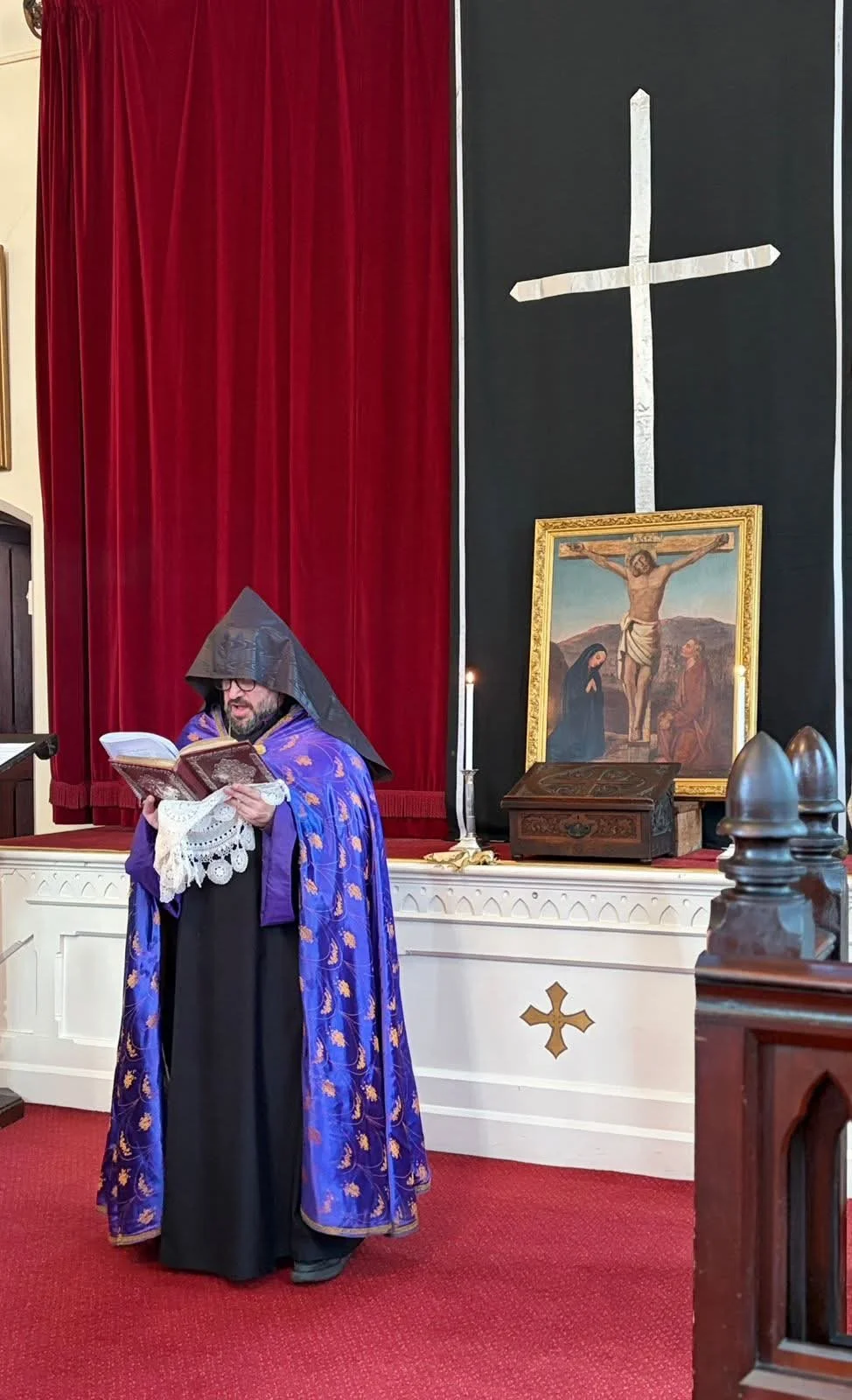
The service was marked by solemn and poignant melodies, deeply rooted in the Armenian sacred tradition. The hymn “Holy God, Holy Mighty, Holy Immortal, who was crucified for us, have mercy on us” resounded through the church with particular intensity, as clergy and faithful alike knelt in adoration before the Holy Tomb.
In his reflection at the conclusion of the service, Bishop Hovakim offered a profound theological meditation on the meaning of the tomb. He reminded the faithful that although Christ is laid in the grave, the tomb is covered with flowers because it is not a place of defeat, but a source of life:
“Christ is buried, yet this tomb is life-giving. Tomorrow we shall witness the greatest miracle.”
Drawing on the teaching of Gregory of Tatev, the Bishop reflected on the mystery of Holy Saturday, when Christ descended into the depths and destroyed the power of death and hell. This, he explained, is not only a past event, but a living reality for every believer.
“What does this mean for us?” he asked. “It means that pain, suffering, and even death do not have the final word. Life is the final word in Christ.”
The Bishop invited the faithful to extend their prayers beyond their own lives and families, calling for intercession for those suffering across the world—especially for Christians in the Middle East and Gulf countries, for peace and unity in Armenia, and for Armenians unjustly imprisoned in Baku.
The service concluded in silence and reverence, as the faithful departed with hearts turned toward the mystery of Holy Saturday, awaiting the light of the Resurrection.
In the Armenian Church, the flowered tomb remains as a visible sign of hope: that even in death, life is already at work, and that through Christ’s burial, humanity is led toward resurrection.