
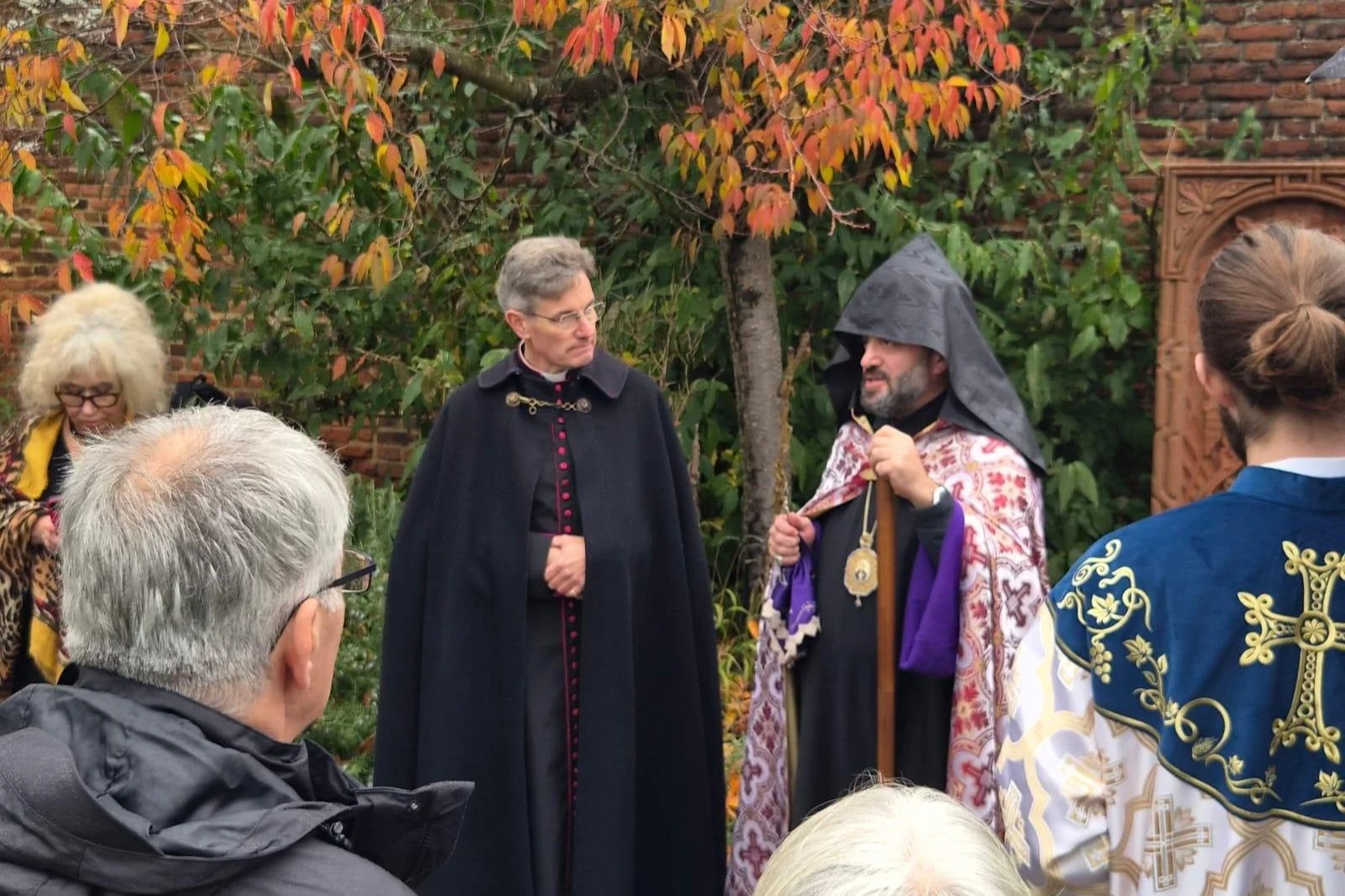
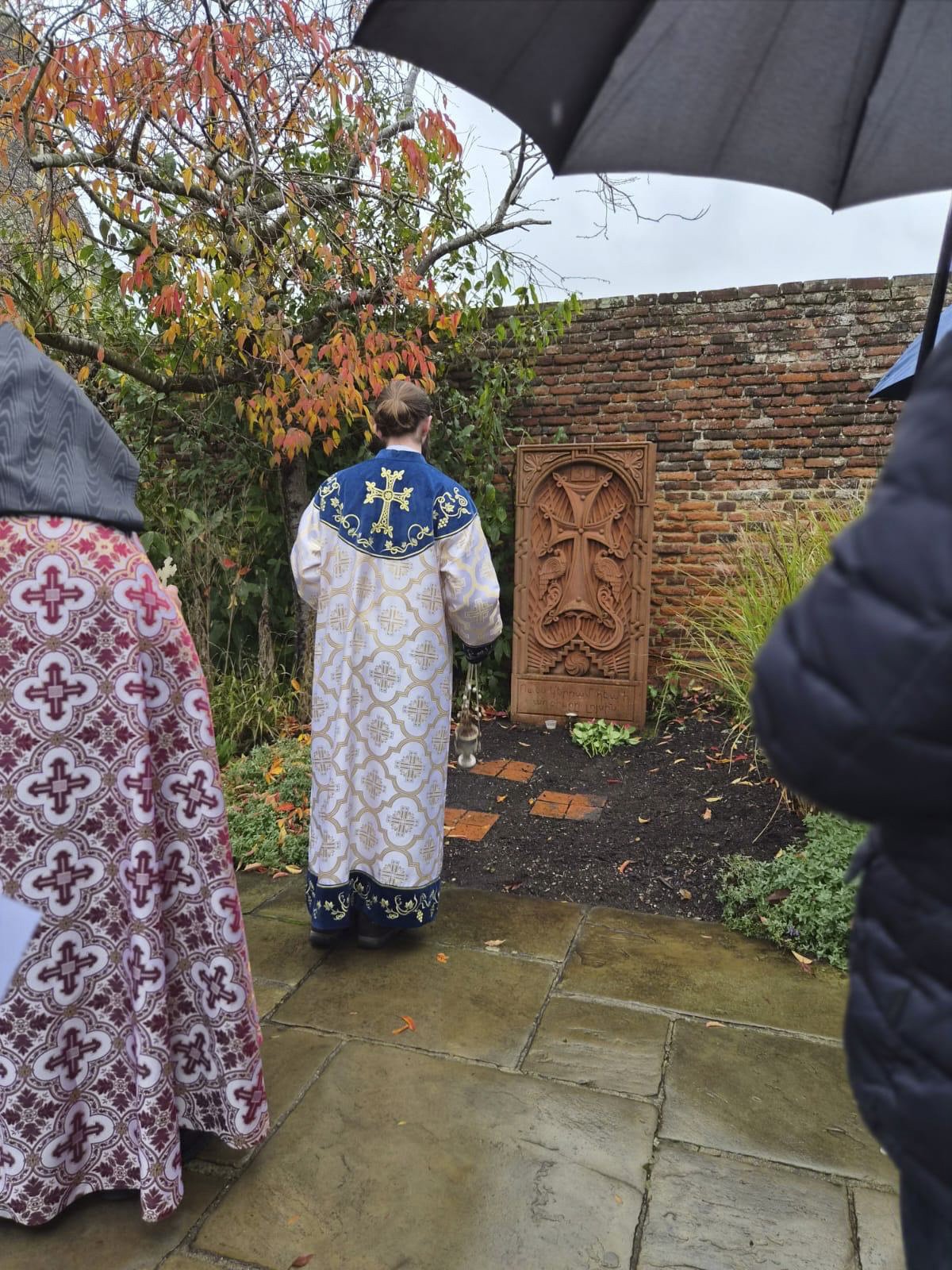
Personal memories of wartime service and family ties to Armenia shaped a Remembrance Day gathering at the Armenian khachkar in Canterbury Cathedral’s Memorial Garden on 11 November 2026.
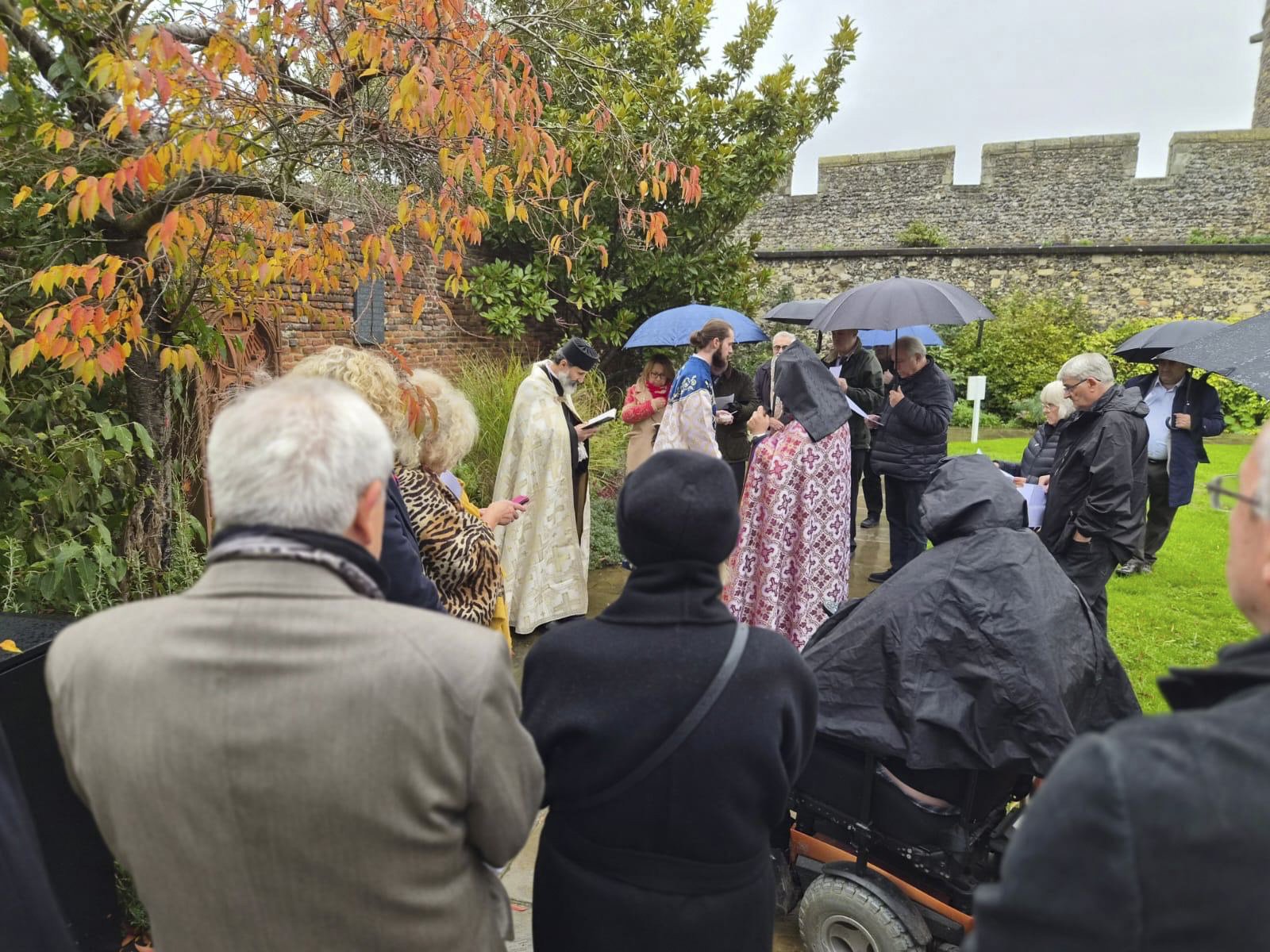
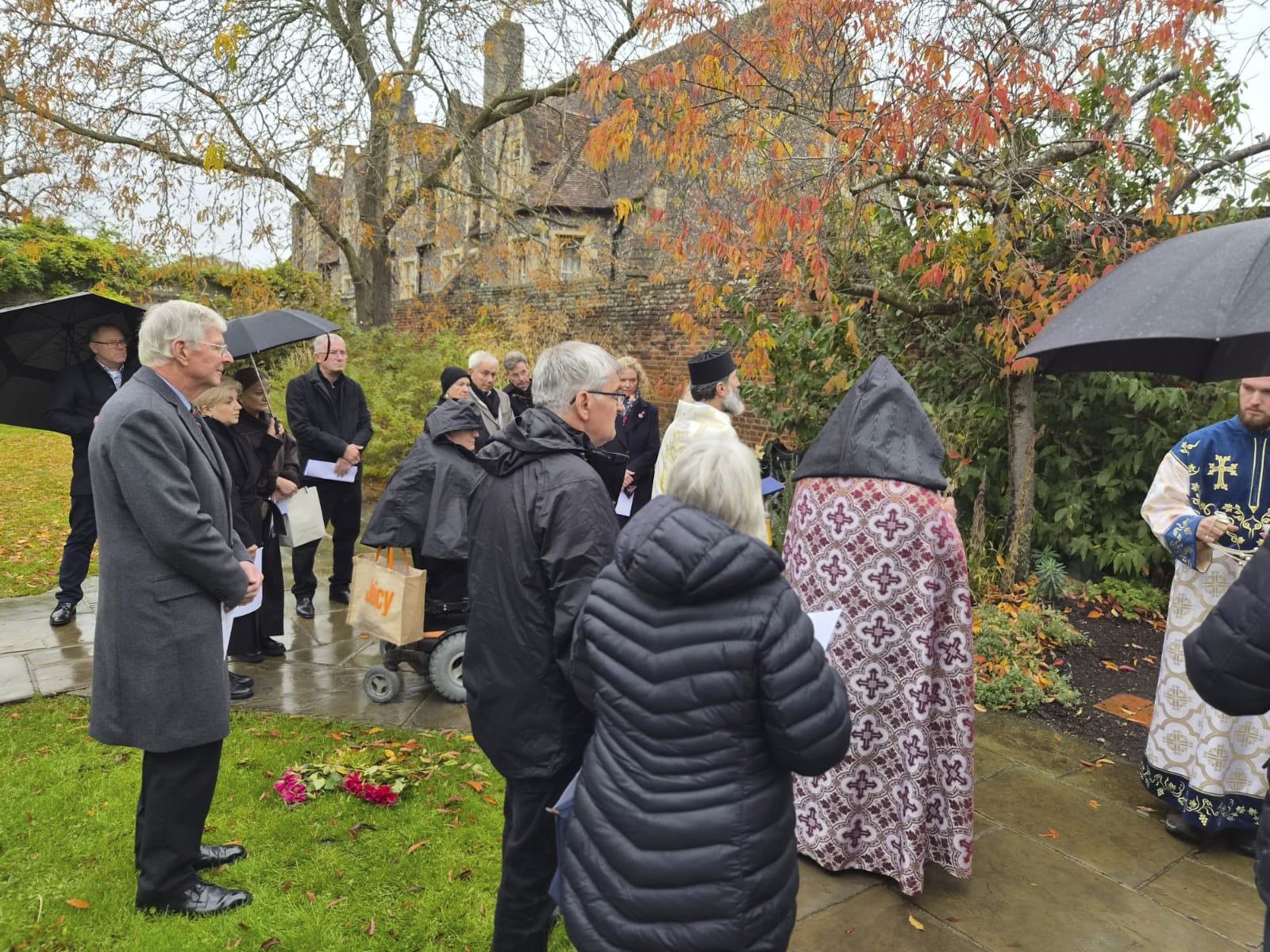
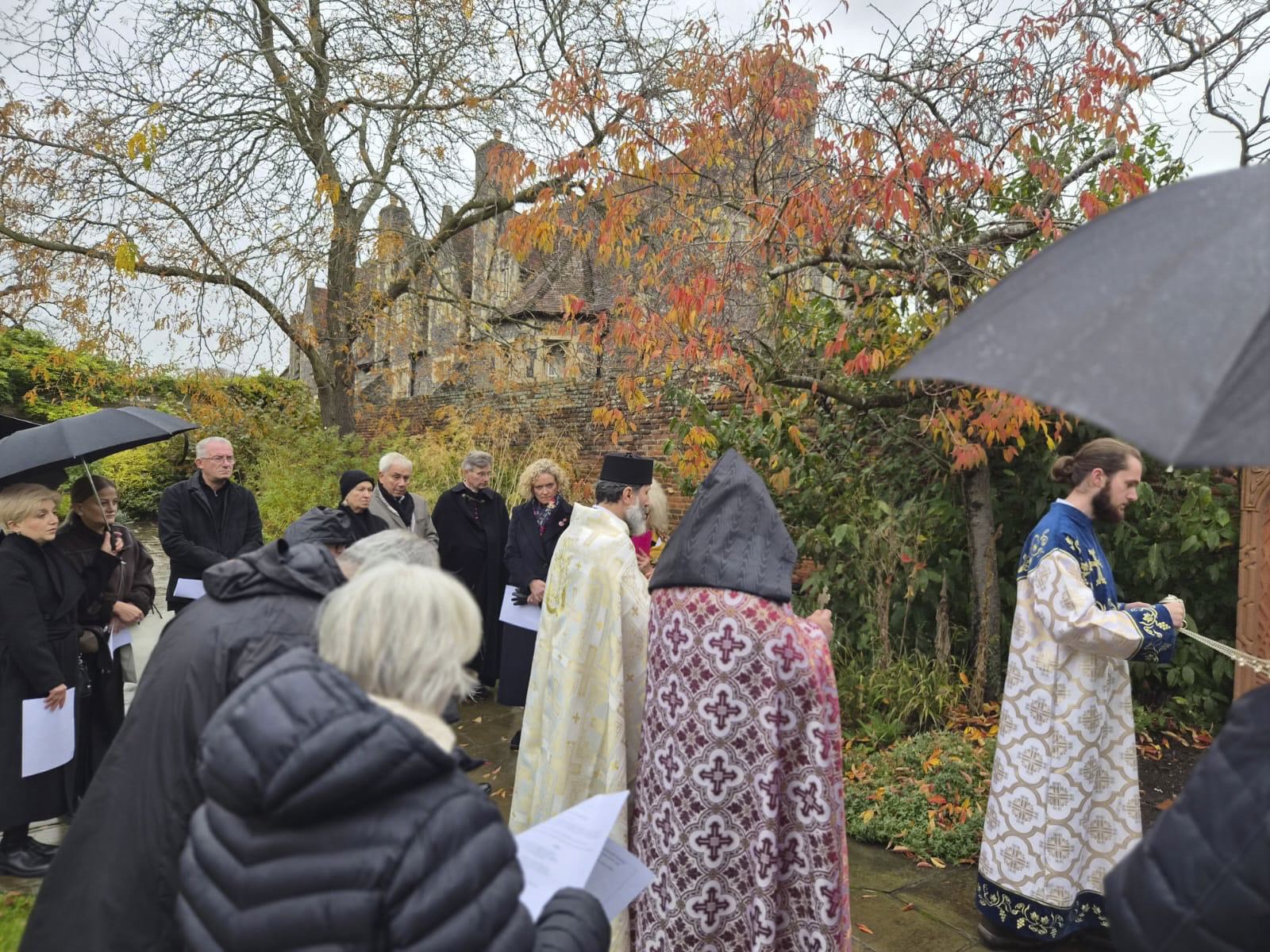
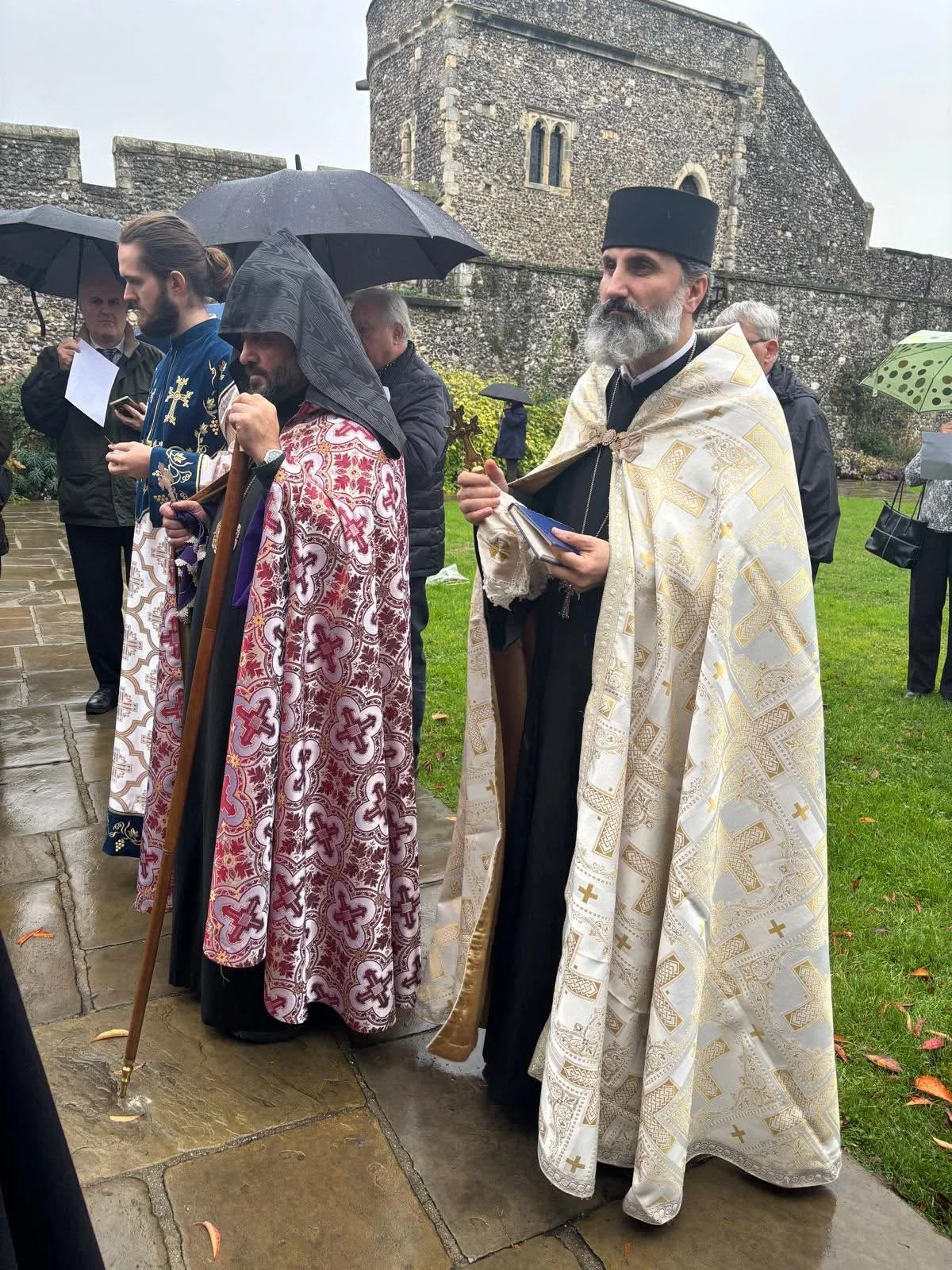
Clergy, community representatives and local residents gathered beside the carved stone cross to remember those who died in war and pray for peace. Among those attending were Garen Arevian, chair of the Armenian Community Council of the United Kingdom, vice-chair Elmira Bagdasarian and other Council representatives, alongside Armenians living in Canterbury and visitors from London.
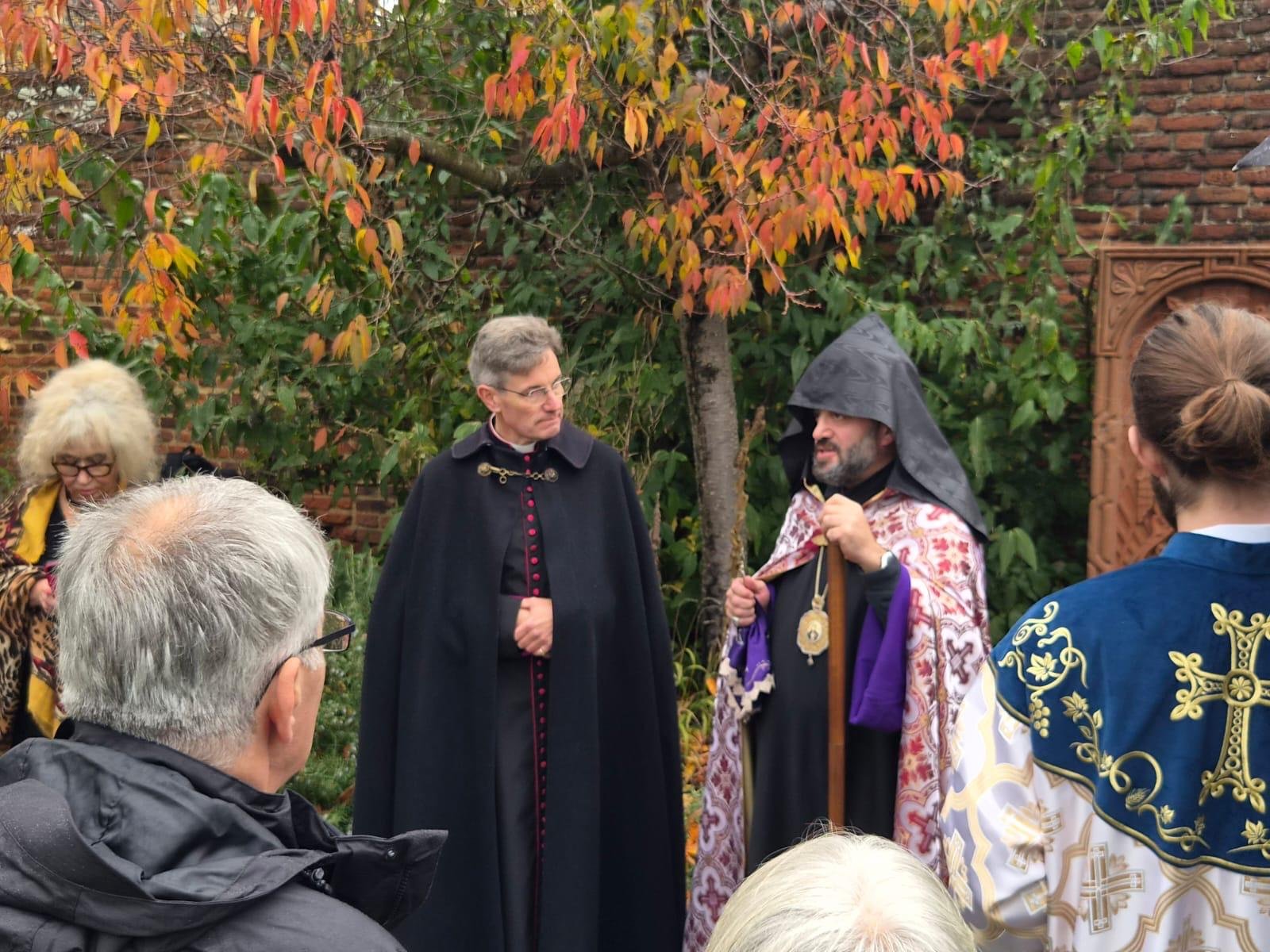
Organised by the Khachkar Peace and Reconciliation Project, the commemoration brought together Bishop Hovakim Manukyan, Primate of the Armenian Church in the United Kingdom and Ireland, Fr Nshan Alaverdyan and the Venerable Dr Will Adam, Archdeacon of Canterbury and Residentiary Canon of Canterbury Cathedral.
The service opened with the Lord’s Prayer and included the singing of I Verin Yerusaghem—“In the Heavenly Jerusalem”—an Armenian hymn praying for the repose of the departed. A Gospel reading, wreath laying and a minute’s silence formed part of the commemoration. Steve Littleboy read the familiar words from For the Fallen.
In his address, Bishop Hovakim spoke of the importance of returning to Canterbury each year, bringing Armenians and their Anglican friends together in remembrance and prayer. He prayed for all victims of war and remembered soldiers who had fallen defending freedom, peace and democracy.
The occasion also held personal significance: his grandfather’s brother and his grandmother’s brother had travelled from Lebanon to Egypt, where they served in the British Army’s cavalry during the Second World War.
Those family connections gave added meaning to remembering the sacrifices of earlier generations. Recalling Christ’s words, “Blessed are the peacemakers,” Bishop Hovakim urged those gathered to let remembrance strengthen their commitment to peace.
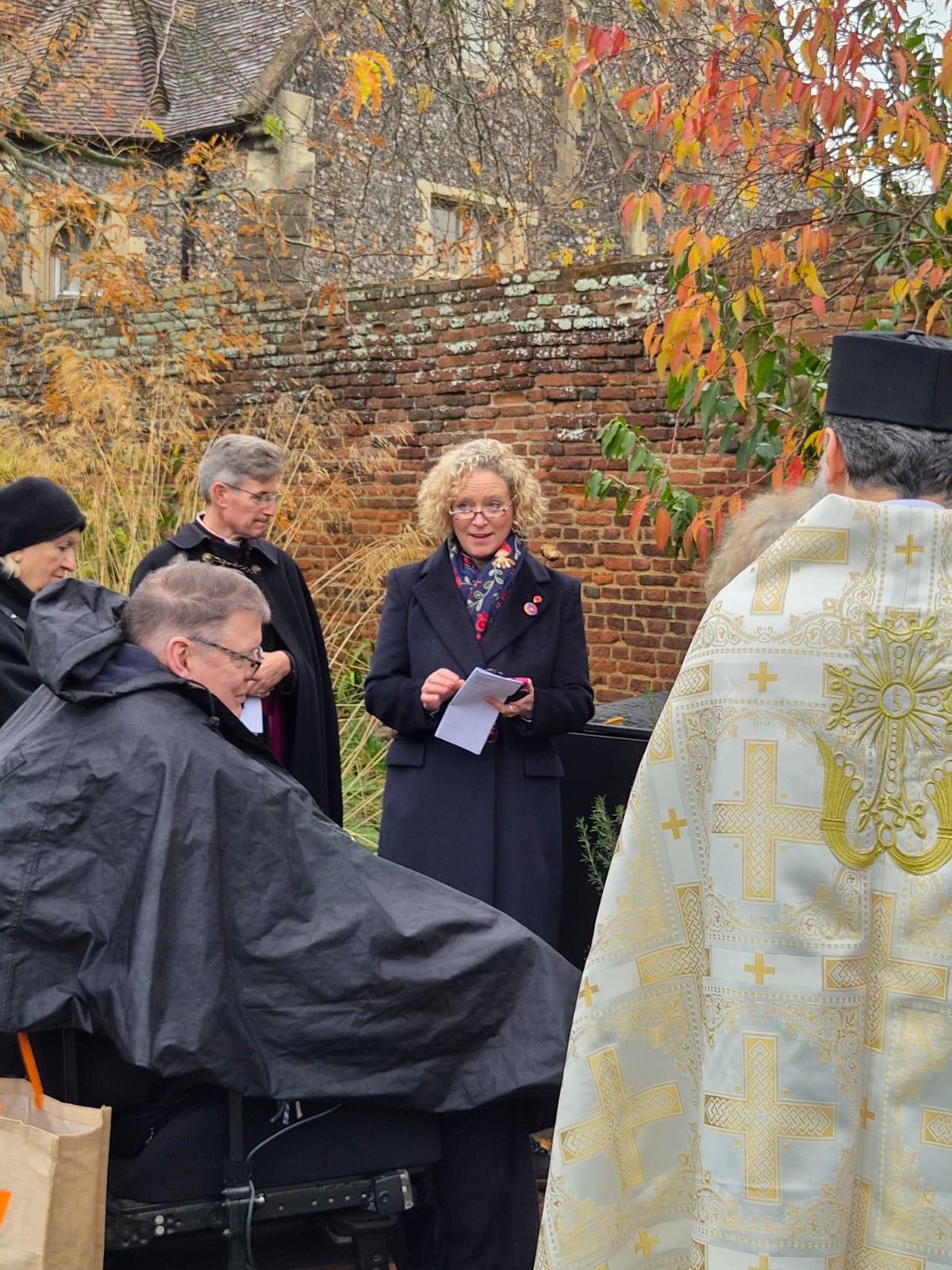
In her address, Christina Astin explored another family connection between Britain and Armenia. A former teacher at The King’s School, where she worked for twenty years, she recalled walking through the Memorial Garden and reflecting on the futility of war.
“But how wonderful to have this peace symbol to remind us that there is hope through reconciliation,” she said.
Christina first visited Armenia in 2001, during celebrations marking 1,700 years of Christianity as the country’s established religion. She recalled the hospitality she encountered, made warmer still when she mentioned that composer Aram Khachaturian was her grandfather’s cousin.
Her grandfather, Ardashes Khachadourian, had settled in England through Cyprus and became a devoted member of St Sarkis Armenian Church in London. Christina remembered his habit of bringing families home unexpectedly for Sunday lunch, much to her grandmother’s exasperation.
Her visit to Holy Etchmiadzin offered an opportunity to honour his memory.
“My grandfather’s ashes had long been scattered, but I wanted to take a little piece of him back to his homeland,” she said.
Her mother had preserved his hairbrush, allowing Christina to leave a few strands of his hair in the rose garden at Holy Etchmiadzin during a small ceremony with friends. A chance encounter with the Catholicos followed. Two years later, she met him again at The King’s School during his visit to Canterbury.
For Christina, those encounters revealed a connection between Canterbury and Etchmiadzin that the khachkar now helps sustain. Her address also remembered Armenian soldiers who fought alongside the Allies in both world wars, and the victims of the massacres of 1895 and the Armenian Genocide of 1915.
“This Khachkar combats loss through creativity,” she said. “Let it inspire us to turn memory into reconciliation.”
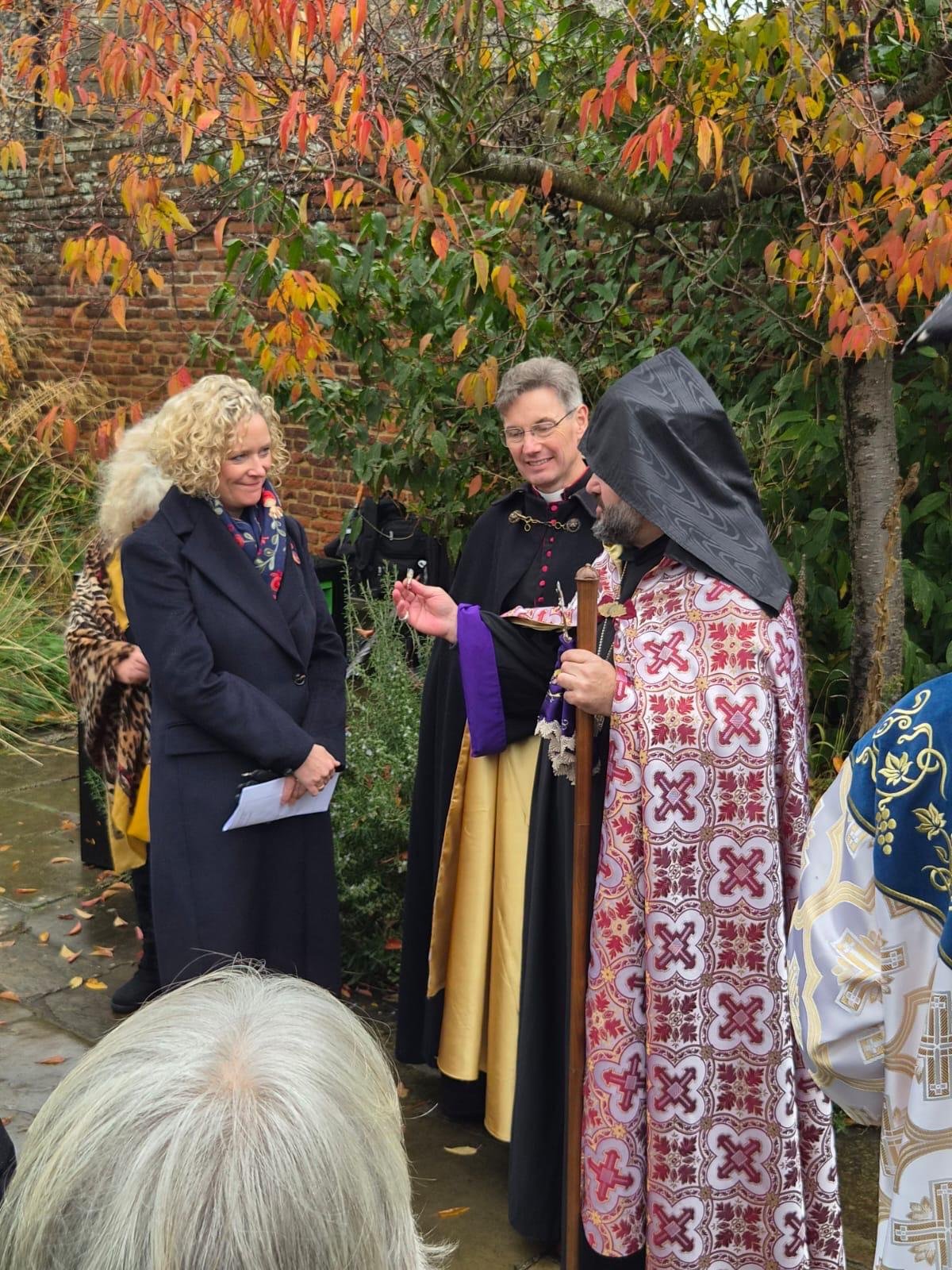
As a gesture of appreciation, Bishop Hovakim presented Christina with a small commemorative cross marking the 25th anniversary of the consecration of St Yeghiche Church. Noticing that she wore the Armenian tricolour alongside a British remembrance poppy, he offered the gift as a reminder of her love for Armenia and her family’s heritage.
The commemoration concluded with a blessing, followed by refreshments and conversation in the Common Room.
Bishop Hovakim extends his heartfelt thanks to the Dean and Chapter of Canterbury Cathedral for their welcome and continued support, and particularly to the Venerable Dr Will Adam, a longstanding friend who joined the Armenian community in prayer.
He warmly thanks Brigadier John Meardon and Vartan Moskofian of the Khachkar Peace and Reconciliation Project for sustaining this annual commemoration, and Houri Moskofian for her help in organising the event locally. He also expresses his appreciation to Christina Astin for sharing her family memories, to Steve Littleboy for his reading, and to all who attended.
Particular thanks go to St Yeghiche Parish and its chair, Vicken Haladjian, for arranging transport from London, and to Garen Arevian, Elmira Bagdasarian and the representatives of the Armenian Community Council of the United Kingdom, together with Canterbury’s Armenian community, for their presence and support.